By: Jose Emilio Olivero
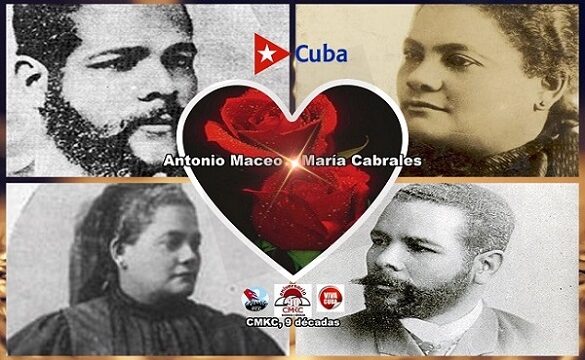
Maria Magdalena Cabrales was born in Santiago de Cuba, the capital of Oriente Province. On February 16, 1866, she married Antonio Maceo at the parish church in the town of San Luis, Oriente.
The couple settled at the La Esperanza estate, near La Delicia, where the Maceo Grajales family lived.
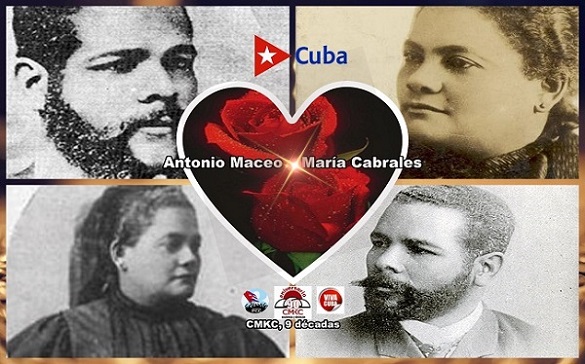
They were matched for each other: strong character and deep-rooted patriotism; despite the hardships of life on the war front for a woman, at times with children in tow.
She was an extraordinarily intelligent woman, and she knew how to adapt to the economic hardships of revolutionary life.
She shared with Maceo the rebel insurrections, the persecutions, the war, the mountains, and exile. She lived through with Maceo the 1868 heroic feat, the unyielding defiance of the Mangos de Baragua, the revolutionary uprising of the Little War, and also the sublime period of 1895.
A week after turning 63, Maria Cabrales passed away. It was July 28, 1905, and she had seen and suffered much: war, conspiracies, exile, betrayals, and the continuation of the struggles for independence.
She felt each of the 26 bullet wounds in Lieutenant General Antonio Maceo’s body as if they were her own. She was 23 years old when she joined the Bronze Titan. From that moment on, she never left his side.
Always faithful, Maria Cabrales’s life is intimately linked to that of the leader of the Baragua Protest. However, far from being a silent companion overshadowed by the hero’s greatness, her story is one of dedication and personal resolve. Who was that woman? Why did so many regard her as the austere and generous embodiment of our redemptive ideal?
After Antonio’s death, Maria remained in the capital of Costa Rica for a few months, but in September 1897 she moved to Nicoya to tend the family home and improve her financial situation. There she served as treasurer of the Cubanas y Nicoyanas club. Following her departure, she was appointed Honorary President of the “Hermanas de Maria Maceo club” (Maria Maceo’s Sisters Club.)
When the battleship “Maine” exploded in Havana Bay on February 15, 1898, she was one of the voices in exile who understood the significance of the events. In a letter addressed to the editor of the newspaper “El Porvenir”, she asserted that, “Spain has been so intent on provoking the Washington government that it finally achieved its goal: a war with the United States to justify its abandonment of the island.”
Months later, the struggle for independence ended in frustration, and the U.S. occupation of the island began. Nevertheless, on May 13, 1899, Maria returned to her homeland, and six days later she took part in the events honoring Jose Marti on the fourth anniversary of his death. There, the people of Santiago saw her, dignified and slender, with the same features as that young girl who, 31 years earlier, had gone into the wilderness to fight for freedom.
In Santiago de Cuba, she established a home for the nation’s orphaned children, designed to provide aid to children whose parents had died during the war. Likewise, she never ceased to participate in patriotic activities. In a huge trunk she kept Antonio’s letters and documents, and thanks to that care, it was also possible to preserve them for history.
Thus she lived until July 28, 1905 at the San Agustin estate, the place where she had been born 63 years earlier. Cuban journalist Pedro Antonio Garcia noted that a hundred horsemen escorted her remains, both at the San Luis City Hall and at the Provincial Government of Santiago de Cuba. Throughout the city the flag flew at half-mast and many homes observed a period of mourning.
The people of Santiago lined both sides of the street to bid farewell to the funeral procession that carried her to Santa Ifigenia. They did so in memory of the Bronze Titan, but also because Maria Cabrales had forged her own legacy of patriotism and devotion.